




 EN
EN  FR
FR  ES
ES  PT
PT  RU
RU  FA
FA 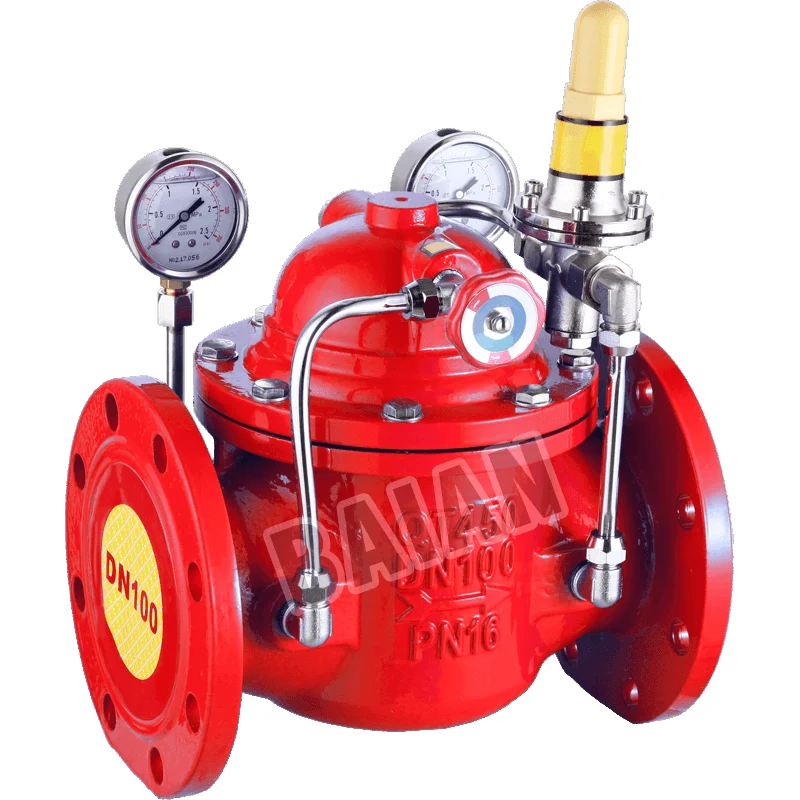
Abstract
A water pressure reducing valve (PRV) is a crucial plumbing component that moderates high incoming water pressure from municipal mains to a safe, usable level within a building. Its proper function is integral to preventing damage to pipes, fixtures, and appliances, while also ensuring the operational integrity of specialized systems like fire protection networks. This article provides a comprehensive examination of where the water pressure reducing valve is located across various settings, including residential, commercial, and industrial properties. It methodically explains the purpose of the valve, details common installation points such as near the main water shut-off, in mechanical rooms, or integrated into fire sprinkler risers, and offers a practical, step-by-step guide for locating the device. The discussion extends to the valve's role within complex fire safety systems, its interaction with fire pumps and hose connections, and considerations for maintenance and adjustment, providing a foundational resource for homeowners, building managers, and fire safety professionals.
Key Takeaways
- Start your search where the main water line enters your property, often in a basement or utility closet.
- Look for a bell-shaped brass device installed just after the main water shut-off valve and water meter.
- In fire protection systems, PRVs are often found on standpipe risers at each floor or after the fire pump.
- Understanding where the water pressure reducing valve is located is the first step in system maintenance.
- Consult building blueprints or a professional plumber if you are unable to locate the valve yourself.
- Regularly check the PRV to ensure it protects plumbing and fire safety equipment from excessive pressure.
Table of Contents
- Step 1: Understanding the Purpose and Function of a Water Pressure Reducing Valve
- Step 2: Identifying Common Locations for PRVs in Different Building Types
- Step 3: A Practical Walkthrough to Pinpoint Your PRV
- The Broader Context: PRVs in Modern Fire Safety and Water Management
- Troubleshooting and Adjusting Your Water Pressure Reducing Valve
- Global Standards and Regional Considerations
- FAQ: Your Questions About Water Pressure Reducing Valves Answered
- Conclusion
- References
Step 1: Understanding the Purpose and Function of a Water Pressure Reducing Valve
Before we embark on the physical search for this component, it is profoundly important to first build a mental model of what it is and why it exists. To ask "where is the water pressure reducing valve located?" without understanding its purpose is like searching for a key without knowing which door it opens. The location is not arbitrary; it is a direct consequence of its function. Let us, therefore, take a moment to appreciate the elegant and essential role this device plays in the circulatory system of our buildings.
What is a Water Pressure Reducing Valve (PRV)? A Foundational Explanation
Imagine a powerful river flowing from a mountain. The force of this water is immense, capable of carving canyons over millennia. Now, imagine you want to divert a small, gentle stream from this river to water your garden. You wouldn't simply open a channel directly from the main current; the force would wash away your plants and soil in an instant. Instead, you would build a series of gates and smaller channels to "step down" the force, creating a manageable flow.
A water pressure reducing valve, often abbreviated as a PRV, performs a conceptually similar function for your building's plumbing. It is a self-contained, bell-shaped valve that takes the high-pressure water supplied by your local municipality and reduces it to a lower, safer, and more functional pressure for internal use. It acts as a gatekeeper, standing between the powerful "river" of the public water main and the delicate "garden" of your home's or building's plumbing system. This single component is a guardian against a host of problems, silently protecting every pipe, faucet, toilet, and water-using appliance from the relentless force of excessive pressure. Its design is a marvel of simple mechanics, typically using an internal spring-loaded diaphragm and seat to modulate the pressure without requiring any external power source.
Why Municipal Water Pressure is Often Too High for Your Property
You might wonder why this reduction is necessary in the first place. Why don't water utility companies simply deliver water at a pressure that is ready to use? The answer lies in the complex demands of geography and infrastructure. A city's water system must serve a vast and varied landscape. It needs enough pressure to push water up to the top floor of a high-rise building, to the last house at the end of a long street, and to the fire hydrant on a hill. To achieve this, the pressure in the main lines is kept significantly high—often exceeding 150 pounds per square inch (psi), which is equivalent to about 10.3 bar.
While this high pressure is essential for the utility's distribution network and for critical services like firefighting, it is far too high for the plumbing systems within most individual buildings. Standard residential plumbing fixtures and pipes are typically designed to operate most effectively and safely at pressures between 40 and 60 psi (approximately 2.8 to 4.1 bar). Some may be rated up to a maximum of 80 psi (5.5 bar), but continuous operation at such levels can cause premature wear and failure. The PRV bridges this gap, creating a customized and safe pressure environment for your specific property while allowing the municipal system to maintain the high pressure it needs for its broader obligations.
The Consequences of Unregulated High Pressure: From Leaks to Catastrophes
Living with unregulated high water pressure is a gamble, and the stakes are high. The effects are not always immediate and dramatic but often manifest as a slow, insidious degradation of your entire plumbing system. Think of it as a constant, invisible stress test on every component.
The most common symptom is the sound of "water hammer" or banging pipes. This occurs when a valve is shut off quickly (like a washing machine's solenoid valve), and the high-pressure water, with its significant momentum, crashes to a halt, sending a shockwave through the pipes. Over time, this repeated shock can weaken joints and fittings, leading to leaks.
Faucets may drip incessantly, and toilet fill valves may fail to close properly, leading to constant running—a significant source of water waste. The lifespan of your expensive appliances, such as washing machines, dishwashers, and water heaters, can be drastically shortened as their internal valves and seals are forced to operate under stresses they were not designed to withstand. In the most severe cases, a pipe or a flexible supply line to a faucet or toilet can burst, causing catastrophic water damage that can ruin floors, walls, and personal belongings, leading to costly and disruptive repairs. In the context of fire safety, excessive pressure can damage sprinkler heads or make fire fighting valves difficult to operate, compromising the entire system's readiness.
How a PRV Works: A Mechanical Analogy
To truly grasp its function, let's refine our analogy. Picture a set of balance scales. On one side, you have a weight representing the incoming high-pressure water. On the other side, you have a large, adjustable spring.
Inside the PRV, the incoming water pushes against a diaphragm or piston. This is the weight on one side of our scale. This movement tries to open a small valve (the seat) to let water pass through. On the other side of the diaphragm is a large calibrated spring. This spring, whose tension can be adjusted with a screw on top of the PRV, pushes back against the diaphragm, trying to close the valve.
The system finds an equilibrium. The valve opens just enough so that the pressure of the water on the downstream side, combined with the force of the spring, balances the pressure of the incoming water. If you open a faucet in the house, the downstream pressure drops slightly. This allows the incoming pressure to push the diaphragm and open the valve a little more, maintaining the set pressure. When you close the faucet, the downstream pressure rises, helping the spring push the valve closed again. It is a dynamic, self-regulating dance of forces, all happening within that small brass body.
The Critical Role of PRVs in Fire Protection Systems
The necessity of pressure regulation becomes even more acute when we consider fire protection systems. These are not passive plumbing networks; they are life-safety systems that must perform flawlessly under extreme conditions. A fire pump, for instance, is designed to boost pressure significantly to ensure water can reach the highest points of a building or the most distant sprinkler head. However, this can create dangerously high pressures in the lower sections of the system.
According to standards set by organizations like the National Fire Protection Association (NFPA), the static pressure in a sprinkler or standpipe system should generally not exceed 175 psi (12.1 bar) unless all components are specifically rated for higher pressures (NFPA 13, 2022). Furthermore, the pressure at a fire hose connection must be regulated. A firefighter needs a pressure that is high enough to project a powerful stream of water but not so high that the hose becomes uncontrollable, a phenomenon known as excessive nozzle reaction. Imagine trying to control a fire hose that is whipping around with the force of a wild animal—it is not only ineffective but also extremely dangerous for the emergency responders.
This is where PRVs become indispensable. They are installed within the fire protection system to manage these pressures. They might be found at the base of standpipe risers, on individual floor levels, or directly at hose valve connections. These specialized valves ensure that sprinkler heads operate at their optimal design pressure and that firefighters have a safe and effective pressure at their disposal. The integrity of an entire firefighting operation can depend on the correct installation and function of these critical valves. Manufacturers of comprehensive fire protection equipment, such as KSB and Rosenbauer, rely on properly regulated systems to ensure their high-performance pumps, hoses, and nozzles function as intended (KSB, 2025; Rosenbauer, 2025).
Step 2: Identifying Common Locations for PRVs in Different Building Types
Now that we have established a solid understanding of the PRV's purpose, we can begin to deduce its most probable locations. The logic is simple: the valve must be placed as close to the source of the water supply as possible to protect the entire system that follows it. However, the specific "where" can vary depending on the building's age, design, and function. Let us explore these different environments.
Residential Buildings: Your Home's First Line of Defense
In a single-family home or a small residential building, the quest for the PRV is usually straightforward. The goal is to find the point where the municipal water supply pipe physically enters the structure. From there, you will follow a logical sequence of components.
-
Basements and Crawl Spaces: The Usual Suspects
For houses with basements or crawl spaces, this is the most common theater of operations. Go to the front of your house, the side facing the street where the municipal water main typically runs. Look for a pipe, usually 3/4 inch or 1 inch in diameter (about 19-25 mm), penetrating the foundation wall. This is your main water line.
Once you have found it, you will likely see a sequence of devices. The first is almost always the main shut-off valve, which allows you to turn off all water to the house. This might be a gate valve (with a round, wheel-like handle) or a ball valve (with a lever handle). Immediately following the shut-off valve, you will often find the water meter, which is installed by the utility company to measure your consumption.
Right after the water meter is the most common place to find the water pressure reducing valve. Its distinctive bell shape and the presence of an adjustment screw or bolt on top make it stand out from other plumbing components. It is placed here to ensure that both the home's plumbing and the water meter itself (on its downstream side) are protected from high pressure.
-
Garages and Utility Closets: Alternative Hiding Spots
In homes built on a concrete slab foundation (common in warmer climates where basements are rare), the main water line will enter the house on the ground floor. The most logical places for it to surface are the garage or a dedicated utility closet.
The strategy remains the same. Look along the walls of the garage, particularly the one closest to the street. You are searching for that incoming pipe and the familiar sequence: shut-off valve, meter (sometimes the meter is in an external box), and then the PRV. Often, the water heater is also located in the garage or a utility closet, and the PRV will be nearby, as it is part of the main plumbing assembly that feeds the water heater and the rest of the house.
-
Exterior Locations: Following the Water Main In
In some regions, particularly where freezing temperatures are not a concern, the entire assembly might be located outside the house in a subterranean utility box. You may have seen these boxes, typically with a plastic or metal lid, set flush with the ground in your front yard or near the sidewalk.
If you cannot find the PRV inside, this is your next place to look. Carefully lift the lid of the utility box (you may need a specific tool from a hardware store). Inside this cramped space, you should find the water meter and, very often, the main shut-off valve and the PRV as well. This configuration is common because it provides easy access for utility workers without them needing to enter your home. Be cautious of insects or small animals that might have made a home in the box.
Commercial and Industrial Properties: A More Complex Landscape
As we move from residential to commercial or industrial buildings, the scale and complexity of the plumbing and fire protection systems increase dramatically. A single PRV at the point of entry may no longer be sufficient or practical. Instead, you will often find multiple PRVs serving different zones or functions. The search requires a more systematic approach.
-
Dedicated Mechanical Rooms
Most large commercial buildings have one or more dedicated mechanical rooms. These are the nerve centers of the building's infrastructure, housing boilers, chillers, pumps, and electrical panels. This is the primary location to begin your search. The main water lines for the building will enter in one of these rooms, often in the lowest level or sub-basement.
Here, you will find a much larger version of the residential setup: large-diameter pipes, massive shut-off valves, and commercial-grade water meters. The main PRV for the domestic water system will be located in this area, regulating the pressure for all the building's sinks, toilets, and other fixtures. It will be a significantly larger and more robust unit than its residential counterpart, but the bell shape and adjustment mechanism will still be recognizable.
-
Riser Locations in Multi-Story Buildings
In a tall building, a single PRV at the base is not enough. The pressure required to push water to the top floors would still be too high for the lower floors. Water pressure increases with elevation drop (due to the weight of the water column in the pipes), a principle known as hydrostatic pressure. For every 10 feet (about 3 meters) of height, the pressure increases by about 4.3 psi (0.3 bar).
To counteract this, buildings are divided into vertical pressure zones. You will find PRVs installed on the water supply risers (the main vertical pipes) at regular intervals, perhaps every few floors. These valves are often located in utility closets or dedicated riser shafts on each floor, reducing the pressure for that specific zone. So, if you are looking for the PRV that serves a particular floor, you need to find the utility closet on that floor or a nearby one.
-
Specialized Locations in Fire Protection Systems
Fire protection systems in commercial buildings are a world unto themselves, with PRVs placed strategically based on hydraulic calculations and safety codes. The question of "where is the water pressure reducing valve located" in this context is critical for fire safety personnel.
- At the Fire Pump Discharge: A fire pump dramatically increases water pressure. A PRV, or more commonly a pressure relief valve, will be installed on the discharge side of the pump to prevent over-pressurization of the entire system.
- On Standpipe Systems and Hose Connections: Standpipe systems are the vertical pipes that supply water to fire hose connections on each floor of a building. To ensure firefighters have a safe and usable pressure, PRVs are installed on these connections. You will find them inside the fire hose cabinets on each floor. These can be factory-set or field-adjustable and are a critical life-safety device. A failure here could render a firefighter's hose useless or dangerously powerful.
- Within Sprinkler System Zone Assemblies: A large building's sprinkler system is often divided into zones. Each zone may have its own control valve assembly, which can include a PRV to maintain the correct pressure for the sprinkler heads in that specific area. These are typically found in riser rooms or dedicated fire control rooms.
| Feature | Residential Building | Commercial Building | Fire Protection System |
|---|---|---|---|
| Primary Location | Basement, crawl space, or garage near the main water shut-off. | Main mechanical room on the lowest level. | Riser rooms, fire pump rooms, or inside hose cabinets. |
| Common Placement | Immediately after the water meter. | After the main building water meter; also on vertical risers for pressure zoning. | On standpipe outlets, at the base of risers, or after the fire pump. |
| Valve Size | Typically 3/4" to 1" (19-25 mm). | 2" to 10" (50-250 mm) or larger. | Varies by application, from 1.5" (38 mm) hose valves to large riser valves. |
| Pressure Goal | Reduce municipal pressure to 40-60 psi (2.8-4.1 bar). | Create multiple pressure zones, often <80 psi for domestic use. | Regulate pressure at hose outlets to 65-100 psi (4.5-6.9 bar) and below 175 psi (12.1 bar) in pipes. |
| Key Identifier | Small, brass, bell-shaped valve near the main shut-off. | Large, flanged, bell-shaped valve in a mechanical room. | Valve attached directly to a fire hose connection or a large valve on a main fire riser. |
Step 3: A Practical Walkthrough to Pinpoint Your PRV
With the theoretical knowledge of where the valve should be, we can now transition to the practical steps of actually finding it. This process is one of logical deduction and observation. Arm yourself with a good flashlight, and let's begin the hunt.
Start at the Source: Tracing the Main Water Line
This is the single most important principle. Every other step depends on it. Your entire building has a single point of entry for its water supply (or in very large complexes, one per building section). Your first task is to locate that entry point.
Think logically about the path water would take from the street to your building. In most jurisdictions, water mains run under the street or the sidewalk. Therefore, the service line to your building will almost certainly enter through the foundation wall that is closest to the street.
Go to that area—be it a basement, garage, or utility closet. Scan the wall from floor to ceiling. You are looking for a pipe. It might be copper, PVC plastic, or PEX tubing. This is your starting point, your "Point A." Once you have positively identified this incoming line, you simply have to follow it. Do not get distracted by other pipes (which could be for drainage, gas, or hot water circulation). Keep your focus on this one main line. The components will appear in a predictable order.
Reading the Signs: Identifying the Valve's Distinctive Shape
As you trace the pipe from the wall, you will encounter other components. You need to learn to distinguish them.
- The Shut-Off Valve: This will be the first or second item on the line. It will have a handle—either a round wheel you turn multiple times (a gate valve) or a single lever you turn 90 degrees (a ball valve). Its purpose is obvious: to shut everything off.
- The Water Meter: This is the property of the utility company. It's a bulky object with a dial or digital display on top. It may or may not be inside your home.
- The Pressure Reducing Valve: This is your target. Look for a component made of brass that has a distinct "bell" shape on top. This bell housing contains the diaphragm and spring. Protruding from the very top of the bell will be a threaded stem with a locknut—this is the adjustment screw. It will look different from any other valve on the line. It does not have a typical handle for turning it on or off. Its only user-serviceable part is that adjustment screw on top.
Take a moment to mentally picture it: a brass body in the pipeline, with a wider, rounded section on top, and a screw and nut at its apex. Once you have seen one, you will recognize it forever.
Using Your Ears: Listening for the Valve in Operation
Sometimes, the PRV can be hidden behind an access panel, insulation, or other equipment. In these cases, you can use your hearing to help locate it. A PRV is a dynamic device; it makes a small amount of noise when it is working.
Have someone inside the house turn a faucet (like a bathtub tap) on full blast and then turn it off again. Go to the area where you suspect the PRV is located and listen carefully. When the water is flowing, you may hear a faint "whooshing" or humming sound as the water passes through the valve. When the faucet is turned off, you might hear a slight "thump" or "groan" as the valve closes down.
This sound is the internal mechanism moving to regulate the pressure. It can be a very effective way to zero in on the valve's location, especially if it is concealed. A loud, chattering, or vibrating noise, however, can be a sign that the valve is failing and needs service.
Consulting the Blueprints: The Architect's Roadmap
If you are in a commercial building or have access to the architectural or plumbing plans for your home, you have found the ultimate cheat sheet. These drawings will show the exact location of all major plumbing components.
Look for the plumbing schematics. On these plans, a water pressure reducing valve is typically represented by a specific symbol. It often looks like a circle with two triangles pointing towards each other on the inside, or a valve symbol with the letters "PRV" next to it. The plans will show its location relative to walls, columns, and other fixed points, removing all guesswork from your search. For any facility manager or maintenance professional, the building's blueprints are the first and most valuable resource.
When to Call a Professional: Knowing Your Limits
There are times when the search may prove fruitless or when you find the valve but are unsure of what to do next. It is vital to recognize the limits of a DIY approach.
If you have followed all these steps and still cannot locate the valve, it is time to call a licensed plumber. They have the experience and tools to locate it quickly. It is possible your home was built before PRVs were required by code and one was never installed. A plumber can test your pressure and confirm this, recommending the installation of a new one if necessary.
Likewise, if you find the valve and suspect it is malfunctioning (due to high pressure, low pressure, or noise), or if you want to adjust it but are not comfortable doing so, calling a professional is the wisest course of action. This is especially true for PRVs within fire protection systems. These are life-safety devices, and their adjustment or service should only be performed by a qualified fire protection specialist in accordance with NFPA standards. Improper adjustment could compromise the entire system. When dealing with a specialized fire protection valves, professional expertise is not just a convenience; it is a requirement.
The Broader Context: PRVs in Modern Fire Safety and Water Management
Understanding where to find a PRV is only the beginning. To truly appreciate its significance, we must place it within the larger ecosystem of building and life safety. The PRV does not work in isolation; it is a key team player, enabling other critical components to perform their jobs effectively. Its relationship with devices like fire pumps, hoses, and advanced suppression systems is deeply symbiotic.
The Symbiotic Relationship Between PRVs and Fire Pumps
A fire pump is the heart of a high-rise or large-scale fire protection system. Its job is to take water from the municipal supply or a dedicated tank and boost its pressure to overcome the effects of gravity and friction loss, ensuring adequate water reaches the highest and most remote parts of the building. However, this creates a paradox. The pressure needed for the top floor could be catastrophically high for the first floor.
This is where the PRV's role becomes elegantly apparent. As noted by pump system specialists like KSB, a complete fire-fighting solution involves more than just the pump; it requires an entire system of controls and valves to manage the pressure the pump creates (KSB, 2025). Pressure reducing valves are installed downstream from the fire pump on the various standpipe risers.
Imagine a 30-story building. The fire pump in the basement might discharge water at 300 psi to ensure 100 psi is available at the top-floor hose connection. Without PRVs, that 300 psi would hit the first-floor hose connection, making it impossible for a firefighter to handle. Instead, a PRV is installed at the first-floor outlet, another a few floors up, and so on. Each valve is set to reduce the pressure to the required 100 psi at its specific location. They act as individual pressure governors, taming the immense power of the fire pump and delivering a safe, effective pressure at every point of use. Without the PRV, the fire pump's strength would be a liability, not an asset.
Ensuring Compatibility with Fire Hoses and Nozzles
The end of the line for a fire protection system is often a fire hose and nozzle. This is the tool that a firefighter will use to directly attack the fire. The effectiveness of this tool is critically dependent on the pressure and flow of the water supplied to it.
Modern firefighting nozzles, like those developed by industry leaders such as Rosenbauer, are sophisticated pieces of equipment. They can be adjusted to produce different stream patterns, from a solid, far-reaching jet to a wide, protective fog (Rosenbauer, 2025). The performance of these patterns—the reach of the jet, the density of the fog—is based on a specific design pressure, typically around 100 psi (6.9 bar).
If the pressure is too low, the stream will be weak, the water will not reach the base of the fire, and the fog pattern will not atomize properly to absorb heat. If the pressure is too high, the nozzle becomes difficult and dangerous to control. The force pushing back on the firefighter, known as nozzle reaction, increases with pressure. Excessive pressure can exhaust firefighters or even cause them to lose control of the hose, injuring themselves or others.
The PRV located at the standpipe hose connection is directly responsible for ensuring this does not happen. It is the final checkpoint that guarantees the pressure delivered to the hose is within the optimal range for the nozzle to perform as designed and for the firefighter to operate it safely.
The Importance of Regular Inspection and Maintenance of PRVs
Because PRVs are mechanical devices with moving parts, seals, and springs, they are subject to wear and tear. Debris in the water line can foul the valve seat, minerals can build up on internal components, and the diaphragm can lose its flexibility or fail over time. A failed PRV can be just as bad as having no PRV at all.
A valve that fails in the "open" position will allow high pressure to pass through, reintroducing all the risks of leaks and damage. A valve that fails in the "closed" position or becomes clogged will severely restrict water flow, "starving" the system. In a domestic system, this might mean a weak shower. In a fire protection system, it could mean a complete failure to deliver water to a sprinkler head or hose, with tragic consequences.
This is why regular inspection and testing, as mandated by standards like NFPA 25, Standard for the Inspection, Testing, and Maintenance of Water-Based Fire Protection Systems, are so vital. This standard outlines specific requirements for periodically testing PRVs to ensure they are regulating pressure correctly and can provide the necessary flow when required. It involves connecting gauges to test ports on the valve and conducting flow tests to simulate a real-world demand. Finding the PRV is the first step; ensuring it works is the ongoing responsibility of the building owner and maintenance personnel.
Integrating PRVs into Advanced Foam Systems and Monitors
The role of pressure regulation extends to even more specialized fire suppression technologies, such as foam systems and large-scale fire monitors.
Foam systems, used for fighting fires involving flammable liquids, work by mixing a foam concentrate with water in precise ratios using a device called a proportioner. The performance of these proportioners is highly dependent on the water pressure being stable and within a specific range. A PRV installed upstream of the proportioner ensures that it receives water at a consistent pressure, allowing it to mix the foam concentrate accurately. This guarantees the production of high-quality foam with the correct expansion ratio and drainage time, which is critical for extinguishing difficult liquid fires.
Large fire monitors, the powerful water cannons you might see at an industrial facility or airport, also rely on regulated pressure. While they require high volumes of water, the pressure must still be controlled to manage the powerful nozzle reaction and achieve the desired stream reach and shape. PRVs or pressure-regulating monitor valves are integral to these systems, allowing a single operator to safely control a device flowing thousands of liters per minute. The entire system, from the pump to the monitor, is a chain where the PRV is a critical link.
Troubleshooting and Adjusting Your Water Pressure Reducing Valve
Locating your PRV is a victory, but sometimes it is just the start of a new challenge. You may have sought it out because you are experiencing symptoms of incorrect water pressure. Understanding these symptoms and knowing the basics of troubleshooting and adjustment can empower you to manage your plumbing system more effectively. However, a word of caution: while minor adjustments are often straightforward, major repairs or work on fire system valves should be left to professionals.
Diagnosing Common PRV Problems: A Symptom-Based Approach
Your plumbing system often speaks to you through symptoms. Learning to interpret this language can help you diagnose a problem with your PRV. The most effective way to approach this is by observing the symptoms, understanding the possible causes, and identifying potential solutions.
| Symptom | Possible Cause | Potential Solution |
|---|---|---|
| Low Water Pressure Throughout the House | The PRV is set too low; the PRV screen is clogged with debris; the valve itself is failing and stuck partially closed. | Adjust the PRV to a higher pressure; clean the inlet screen; replace the valve's internal components or the entire valve. |
| High Water Pressure (Banging Pipes, Leaky Faucets) | The PRV is set too high; the valve is failing and allowing pressure to "creep" up when no water is flowing; the valve is stuck open. | Adjust the PRV to a lower pressure; replace the valve's diaphragm/seat; replace the entire valve. |
| Pressure is Good but Flow is Weak | The PRV is severely clogged with debris; the PRV is too small for the home's demand; the valve has failed internally. | Clean the PRV screen and internal parts; consult a plumber to see if a larger valve is needed; replace the valve. |
| Humming, Chattering, or Vibrating Noise | Water velocity is too high (often from a partially open valve); worn internal parts (seat or washer); pressure is very high. | This often indicates imminent failure. It's best to have the valve rebuilt or replaced by a professional. |
| No Water at All | The PRV has completely failed in the closed position or is fully clogged. | This is an emergency situation. The valve needs to be replaced immediately by a professional plumber. |
The Tools You'll Need for Adjustment and Basic Maintenance
Before you attempt any adjustment, it is wise to gather a few essential tools. Having the right equipment makes the job safer and more effective.
- Water Pressure Gauge: This is non-negotiable. You cannot adjust pressure accurately without measuring it. Purchase a gauge that connects to a standard hose bib (an outdoor spigot or your washing machine's cold water connection). This is your eyes and ears for this task.
- Adjustable Wrench (or Pliers): You will need this to loosen the locknut on the PRV's adjustment screw.
- Screwdriver or Wrench for the Adjustment Screw: The adjustment screw itself might have a slotted head (for a flathead screwdriver), a hex head (for a wrench), or a square head. Look at your PRV to see what you need.
- Pipe Wrenches (two): If you are attempting a more advanced repair, like cleaning the screen, you will need two large pipe wrenches to unscrew the valve's union fittings. One wrench holds the valve steady while the other turns the fitting.
A Step-by-Step Guide to Adjusting Pressure
Adjusting the pressure on most PRVs is a simple process, but it must be done methodically.
- Establish a Baseline: Before you touch anything, measure your current water pressure. Turn off all water-using appliances in the house. Screw your pressure gauge onto an outdoor hose bib and turn on the spigot. Note the reading. This is your static pressure. The ideal range is typically 50-60 psi.
- Prepare for Adjustment: Locate the adjustment screw on top of the PRV's bell housing. You will see a threaded stem and a locknut tightened against the bell. Using your adjustable wrench, turn the locknut counter-clockwise a few turns to loosen it. Do not remove it completely.
- Make the Adjustment:
- To Increase Pressure: Use your screwdriver or wrench to turn the adjustment screw clockwise. This tightens the internal spring, allowing a higher pressure downstream.
- To Decrease Pressure: Turn the adjustment screw counter-clockwise. This loosens the spring, reducing the downstream pressure.
- Adjust in Small Increments: Make only small adjustments at a time—a half-turn or a full turn at most. After each adjustment, go to a faucet inside the house and run it for about 30 seconds. This allows the pressure to stabilize at the new setting.
- Check Your Work: Go back to your pressure gauge and check the new reading. Repeat steps 3 and 4 until you reach your desired pressure.
- Lock it In: Once you are satisfied with the pressure, hold the adjustment screw steady with your screwdriver/wrench and use the other wrench to tighten the locknut down against the bell housing. This prevents vibrations from changing your setting over time.
- Final Test: Do one last check of the pressure gauge to ensure nothing changed when you tightened the locknut.
Understanding and Replacing the Diaphragm and Spring
Over many years, the internal components of a PRV wear out. The most common point of failure is the rubber diaphragm. It can become stiff, develop small tears, or lose its seal. When this happens, adjusting the screw may have no effect, or the pressure may "creep" up to match the high inlet pressure when no water is running.
Many PRVs are designed to be serviceable, and manufacturers sell rebuild kits that include a new diaphragm, spring, seat, and O-rings. Replacing these components is a more advanced job than a simple adjustment. It requires shutting off the main water supply, relieving the pressure, and carefully disassembling the valve.
The general process involves unscrewing the entire bell housing from the valve body. This exposes the diaphragm and spring, which can then be replaced. It is crucial to ensure all parts are installed in the correct order and orientation and that the sealing surfaces are clean. While this can be a cost-effective alternative to replacing the entire valve, it is a job best suited for someone with solid plumbing experience. If you are at all uncertain, calling a professional is the safer and more reliable option.
Global Standards and Regional Considerations
While the basic principles of pressure regulation are universal, the specific codes, materials, and environmental challenges can vary significantly around the world. For professionals working in international markets such as South America, Russia, Southeast Asia, the Middle East, and South Africa, understanding these regional nuances is vital for compliance and system longevity.
An Overview of NFPA Standards for PRVs in Fire Protection
The National Fire Protection Association (NFPA), based in the United States, is arguably the most influential body in the world for setting fire safety standards. Its codes are widely adopted or used as a basis for local regulations globally. Three key documents are particularly relevant to PRVs:
- NFPA 13:Standard for the Installation of Sprinkler Systems. This standard dictates the maximum allowable pressures within a sprinkler system and provides criteria for when PRVs are required.
- NFPA 14:Standard for the Installation of Standpipe and Hose Systems. This is the primary document governing PRVs used on fire hose connections. It specifies the required pressure ranges at the outlet and mandates testing procedures to ensure both static and residual (flowing) pressures are correct.
- NFPA 25:Standard for the Inspection, Testing, and Maintenance of Water-Based Fire Protection Systems. This standard provides the "how-to" for long-term care, outlining the frequency and methods for testing PRVs to ensure they remain functional over the life of the building.
For any company supplying fire safety equipment internationally, ensuring products are compliant with or can be integrated into systems designed around NFPA standards is a significant advantage.
Adapting to Local Codes: Considerations for South America and the Middle East
Many countries in South America and the Middle East have developed their own national building and fire codes, but they often draw heavily from NFPA standards. However, local amendments and specific requirements are common.
In the Middle East, particularly in the Gulf Cooperation Council (GCC) countries, there is a strong emphasis on third-party certifications. Products often need to be listed by internationally recognized laboratories like UL (Underwriters Laboratories) or FM (FM Global). Furthermore, the extreme ambient heat can affect the performance and lifespan of the elastomeric components (like diaphragms) in PRVs. Specifying valves with materials rated for higher temperatures is a prudent measure. The rapid development of high-rise buildings in cities like Dubai and Doha means that complex, multi-zone pressure regulation in both domestic water and fire systems is the norm.
In South America, the regulatory landscape can be more fragmented, with standards varying between countries like Brazil, Argentina, and Chile. While NFPA is a common reference, local engineering practices and the availability of specific materials can influence system design. Seismic activity is a major concern in countries along the Andes mountains. Plumbing and fire systems, including their PRVs and pipe supports, must be designed to withstand earthquakes. This may involve specifying flexible connections or valves with higher durability ratings.
Material and Climate Challenges in Southeast Asia and South Africa
Climate and water quality present unique challenges in these regions.
In Southeast Asia, the combination of high humidity and high salinity in coastal areas creates a highly corrosive environment. Using standard brass or bronze for PRVs may not be sufficient. Specifying valves made from more corrosion-resistant materials, such as stainless steel or those with specialized coatings, can be crucial for ensuring a long service life. Water quality can also be an issue, with higher levels of sediment or aggressive minerals. This makes PRVs with easily accessible and cleanable strainers a particularly valuable feature.
In South Africa, the country faces significant water scarcity challenges. This has led to a strong focus on water conservation in plumbing codes. PRVs play a role here by preventing leaks and water waste caused by high pressure. The national standard, SANS 10252-1, provides guidance on water supply installations and pressure management. The diverse geography, from coastal regions to the highveld plateau, also means that system designs must account for large variations in elevation and municipal supply pressures.
Specific Requirements in the Russian Federation
The Russian Federation operates under its own comprehensive set of state standards known as GOST (Gosudarstvennyy Standart) and technical regulations (e.g., SP 5.13130 and SP 10.13130 for fire protection). While there is a process of harmonization with international standards like ISO, compliance with GOST is mandatory.
For a supplier entering the Russian market, obtaining GOST certification for products like PRVs is essential. This process involves rigorous testing and documentation to prove that the product meets Russia's specific safety and performance criteria. The extreme cold in many parts of Russia also places a heavy emphasis on frost protection for all water systems. When a PRV is located where it could be exposed to freezing temperatures, it must be adequately protected with insulation and possibly heat tracing to prevent catastrophic failure from ice formation. Material specifications must also account for performance at very low temperatures.
FAQ: Your Questions About Water Pressure Reducing Valves Answered
How do I know if my water pressure is too high? The most reliable way is to use a water pressure gauge, available at most hardware stores. Attach it to an outdoor spigot and turn on the water. A reading above 80 psi (5.5 bar) is generally considered too high. Other symptoms include banging noises in pipes (water hammer), frequently dripping faucets, and recurring failures of toilet fill valves or appliance solenoids.
What is the typical lifespan of a PRV? The lifespan of a water pressure reducing valve can vary greatly depending on water quality, usage, and the initial quality of the valve itself. A good quality, professionally installed PRV can last for 10 to 15 years or even longer. However, in areas with very hard water or debris in the lines, they may require servicing or replacement in as little as 5 years.
Can I install a water pressure reducing valve myself? While it is physically possible for someone with advanced plumbing skills, it is generally not recommended for the average homeowner. Installing a PRV requires cutting into the main water line, soldering or using compression fittings, and ensuring it is installed in the correct orientation. A mistake can lead to major leaks. This job is best left to a licensed plumber.
Why does my PRV make a humming or vibrating noise? A humming or chattering noise often indicates a problem. It can be caused by extremely high incoming pressure forcing water through a small opening in the valve at high velocity. It can also be a sign of worn-out internal parts, such as the seat washer or diaphragm. While not always an immediate emergency, it is a clear signal that the valve is under stress and should be inspected by a professional.
Does a PRV reduce water flow as well as pressure? This is a common point of confusion. A properly functioning and correctly sized PRV reduces pressure, not flow (which is measured in gallons or liters per minute). It is designed to allow enough flow to meet the demands of your household or building. However, if a PRV becomes clogged with debris or fails, it can indeed restrict flow, leading to the sensation of a weak shower even if the static pressure seems adequate.
Are there different types of PRVs for residential and fire systems? Yes, absolutely. While they operate on similar principles, the design, materials, and testing requirements are very different. Residential PRVs are designed for domestic water use. PRVs used in fire protection systems are life-safety devices. They must be "listed" by a recognized testing laboratory (like UL) specifically for fire service. They are built to be more robust and fail-safe and must undergo rigorous testing regimes as defined by NFPA standards to ensure they will perform reliably during a fire.
Conclusion
The journey to find where the water pressure reducing valve is located is more than a simple search for a piece of plumbing hardware. It is an exploration into the heart of a building's circulatory system, a lesson in the physics of water, and an exercise in appreciating the unseen components that maintain safety and order. From the basement of a family home to the complex riser systems of a skyscraper, the PRV stands as a silent guardian, taming the immense force of the municipal supply to deliver water at a pressure that is both useful and safe.
We have seen that its location is a matter of logic—placed at the frontier between the public main and the private system. We have learned to identify it by its characteristic shape and to listen for its subtle sounds. Most importantly, we have come to understand that its role extends into the critical realm of fire protection, where its precise function can be a matter of life and death, enabling firefighters to do their job effectively. Whether you are a homeowner seeking to solve a plumbing issue, a facility manager responsible for a large building, or a fire safety professional designing a life-saving system, understanding the location, function, and maintenance of the PRV is fundamental knowledge. This small, unassuming valve is a testament to elegant engineering, a vital component that ensures the daily, reliable, and safe delivery of our most essential resource.
References
National Fire Protection Association. (2022). NFPA 13: Standard for the installation of sprinkler systems.
National Fire Protection Association. (2023). NFPA 25: Standard for the inspection, testing, and maintenance of water-based fire protection systems.
KSB. (2025). Sprinkler pumps, valves and all-in solutions for fire protection systems.
Rosenbauer. (2025). Fire fighting hose nozzles & monitors.
International Code Council. (2021). International plumbing code.
Wood, D. M. (2013). Fundamentals of fluid mechanics (7th ed.). John Wiley & Sons.
Tchobanoglous, G., Burton, F. L., & Stensel, H. D. (2003). Wastewater engineering: Treatment and reuse (4th ed.). McGraw-Hill.
Walski, T. M. (2006). A history of water distribution. Journal of the American Water Works Association, 98(3), 110–121. https://doi.org/10.1002/j.1551-8833.2006.tb07611.x
U.S. Environmental Protection Agency. (2017). Controlling water pressure for conservation. WaterSense.
South African Bureau of Standards. (2012). SANS 10252-1: Water supply and drainage for buildings Part 1: Water supply installations.