




 PT
PT  EN
EN  FR
FR  ES
ES  RU
RU  FA
FA 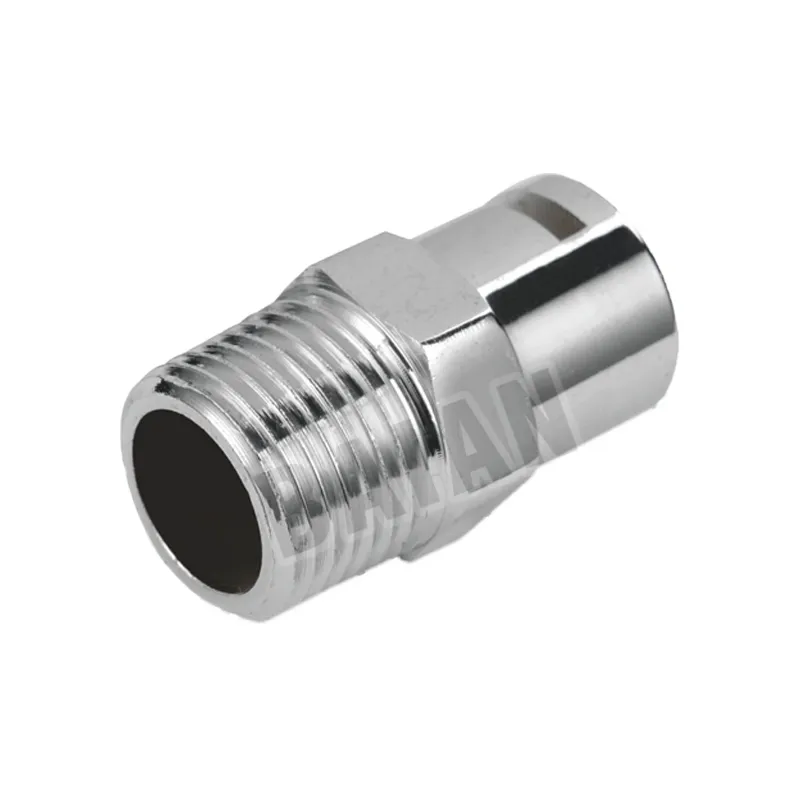
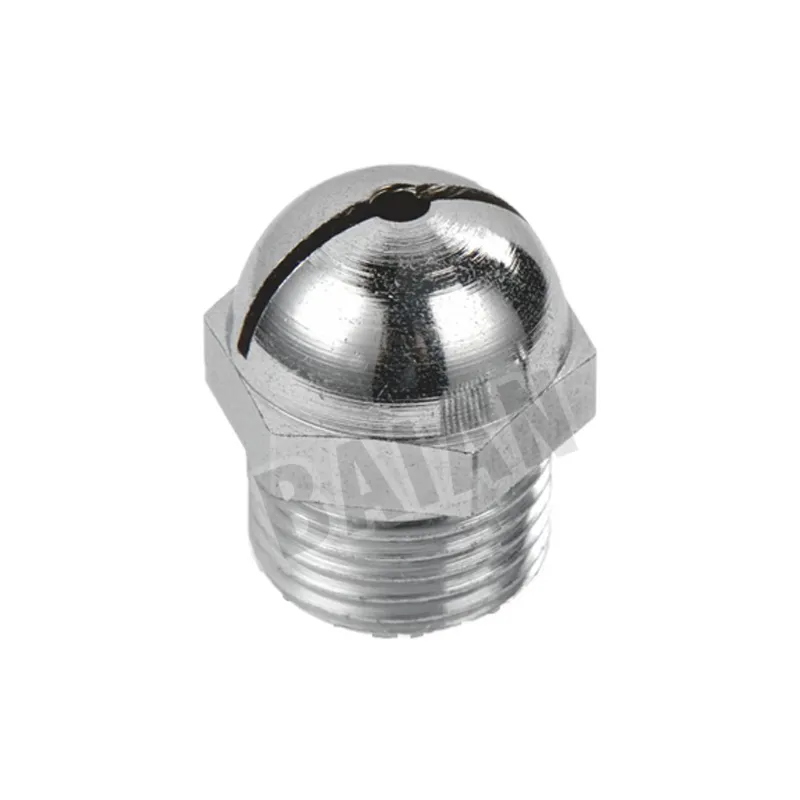
- In the face of fire, besides proactive firefighting equipment, there is another system that forms a continuous water curtain barrier, buying precious time to stop the spread of fire and protect critical facilities—this is the water curtain sprinkler system.
Water curtain sprinklers are the core spraying devices fixed in the piping of a water curtain system. They continuously spray water, forming a water curtain. According to national standards, their minimum operating pressure is 0.1 MPa, and the typical operating pressure range is 0.1 to 0.6 MPa.
The primary mission of this water curtain is not to directly extinguish the flames, but to achieve protective cooling of fire-threatened surfaces and effective fire separation.
01 Firefighting Core: Definition and Core Functions
Water curtain sprinklers are the key implementing components of a water curtain fire protection system. This system typically consists of water curtain sprinklers, deluge alarm valves, water supply networks, and detection alarm devices. It uses water as the sole extinguishing agent, offering excellent economic and environmental benefits.
Its core functions are clearly divided into two main categories: fire-resistant partitioning and protective cooling.
- Fire-resistant partitioning sprinklers form a complete water wall or curtain through dense spraying, blocking flame penetration, reducing radiant heat, and preventing the spread of smoke and hot air currents. They provide alternative partitioning at openings where physical firewalls cannot be installed.
- Protective cooling sprinklers, on the other hand, spray water directly onto the surface of the protected object (such as fire-resistant roller shutters, doors, windows, and building exterior walls), forming a water film to cool and prevent these partitions from losing their integrity due to high temperatures.
02 Scientific Barriers: Working Principles and Key Technologies
Water curtain sprinklers, under the action of pressurized water, atomize and guide the incoming water flow in a special way. The water flow is sprayed from the sprinkler head in a predetermined direction, forming dense granular water droplets or a continuous water curtain of a certain thickness, uniformly covering the designed range and area.
This process provides multiple fire-fighting effects on the outer surface of the protected object, including cooling, suffocation, emulsification, dilution, and electrical insulation, thereby effectively suppressing fire.
To ensure its effectiveness, water curtain sprinklers have key performance requirements in their design. Among these, water spray uniformity and thermal insulation efficiency are important indicators. For example, for sprinklers used for fire compartmentation, the water volume in any local area within its spray range must be neither less than 50% nor more than 200% of the average, ensuring the integrity of the water curtain without any weak points.
03 Application Scenarios, Safeguarding the Safety of Diverse Spaces
Due to its unique functions, water curtain sprinklers play an irreplaceable role in various modern buildings and specific locations. They are often used in conjunction with fire-resistant roller shutters, fire curtains, or glass curtain walls as their “cooling partner,” enhancing their fire resistance.
In large public buildings, common installation locations include vertical openings such as floor openings through which escalators and spiral staircases pass, and the proscenium arches of large stages, to prevent flames and smoke from spreading upwards along these pathways.
In addition, in high-fire-risk areas such as petrochemicals, water curtain sprinklers are also used in liquefied petroleum gas storage tanks, chemical plant areas, and other locations for fire control and equipment cooling protection.
04 Professional Selection, Technical Parameters, and Classification
To meet different protection needs, water curtain sprinklers are classified in different ways for precise adaptation.
Based on construction and application, they can be divided into curtain type (slit/deluge type), window type, and eaves type. Based on core application, they are divided into: Type G (fire separation only), Type L (protection and cooling only), and Type T (general purpose).
When selecting, several key parameters need to be considered: flow coefficient, atomization angle, and operating pressure. The sprinkler model usually includes a flow coefficient K value (e.g., ZSTM 80, K=80), which directly affects the water volume sprayed at a given pressure.
The atomization angle (e.g., 90°, 120°, 150°, etc.) determines the width of the water curtain deployment. The layout of the project must strictly follow the specifications. For example, when used for protection and cooling, it is advisable to arrange it in a single row, while for large openings such as the stage entrance, it is necessary to arrange it in double rows or even multiple rows to ensure that there are no blind spots in the protection.
| Número do modelo | ZSTM-8 | ZSTM-10 | ZSTM-12 | ZSTM-15 |
| Flow Characteristic Parameter K | 35 | 44 | 61 | 77 |
| Spray Angle (°) | 98 | 110 | 113 | 114 |
| Connection Thread | R1/2 | R1/2 | R1/2 | R1/2 |
| Spray Flow Rate Q (L/min) | Q=K√10P K: Flow characteristic parameter P: Nozzle working pressure | |||