





 PT
PT  EN
EN  FR
FR  ES
ES  RU
RU  FA
FA 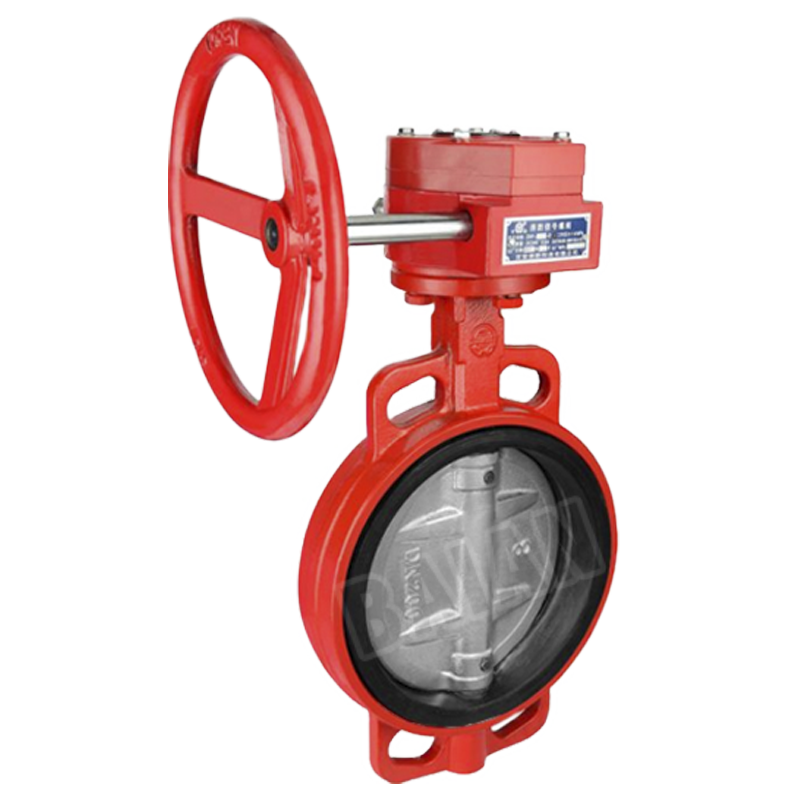
In modern industrial processes, valves, as the “throat” of fluid pipelines, directly impact production efficiency and safety. Recently, a wafer-type turbine butterfly valve, integrating high efficiency, durability, and intelligent control, has become the focus of market attention. With its unique structural design and wide applicability, this product is rapidly penetrating multiple key fields such as petroleum, chemical, power, and water treatment, providing superior solutions for industrial pipeline systems.
- Structural Innovation, Easier Operation
Traditional valves often suffer from inconvenient operation when dealing with large-diameter pipelines due to excessive opening and closing torque. The most significant highlight of this highly anticipated wafer-type turbine butterfly valve is its use of a worm gear drive. This design is not only compact, small in size, and lightweight, but more importantly, it greatly improves the ease of valve operation through the principle of worm gear reduction and torque amplification. Even in applications with large nominal diameters (such as DN200 and above), operators can easily and quickly open and close the valve with a 90° rotation using the handwheel, significantly reducing labor intensity.
- A Guardian of Sealing Under Harsh Conditions
To address the complexity of different industrial media, this series of butterfly valves offers a variety of material options. The valve body can be made of cast iron, ductile iron, cast steel, and stainless steel (CF8/CF8M), while the sealing pairs are equipped with nitrile rubber (NBR), ethylene propylene diene monomer (EPDM), and highly corrosion-resistant polytetrafluoroethylene (PTFE), depending on the temperature and medium.
Especially in highly corrosive environments such as desulfurization and chemical processing, this valve demonstrates excellent adaptability. Its unique lining design completely isolates the medium from the valve body, effectively resisting corrosion and abrasion from chlorides and acidic/alkaline slurries, ensuring long-term stable operation under high-wear conditions such as limestone-gypsum wet desulfurization. Furthermore, for cryogenic liquefaction plants or high-temperature steam pipelines, the triple-eccentric hard-seal butterfly valve solves the problem of sealing failure caused by temperature changes through elastic deformation compensation of the metal sealing surface, achieving the stringent requirement of zero leakage.
- Easy Installation, Expanding Application Range
The wafer-type connection is another core advantage of this valve. It is directly clamped between the two flanges of the pipeline using long bolts, simplifying the installation process, saving flange costs, and significantly saving pipeline space. Recent market procurement trends show that the demand for wafer-type turbine butterfly valves continues to rise, from urgent spare parts procurement by power plants to large-scale pipeline renovation projects by water treatment companies. It performs excellently in water supply and drainage systems for flow regulation and in the metallurgical industry as a flow-stopping device.
- Conclusion
With the acceleration of Industry 4.0, the requirements for valve products in the fluid control field are developing towards higher precision, longer lifespan, and stronger adaptability. With its compact structure, easy operation, reliable sealing, and versatility, the wafer-type turbine butterfly valve is gradually becoming the preferred solution for designers and engineers in project planning, safeguarding the safe and economical operation of industrial pipelines worldwide.